

If you could un-invent something, what would it be?
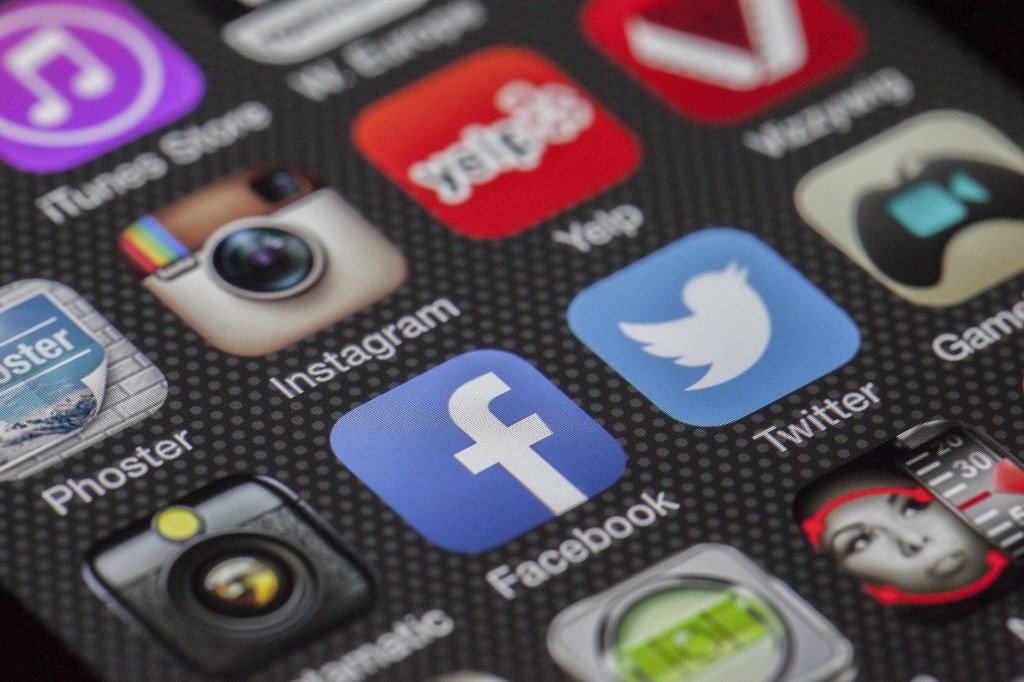
If I could uninvent something, it would be the modern day Internet as it exists today. Computers to store data and used for scientific documentation of research data is one thing, but opening up the Internet has proven to be a modern day demon and angel at the same time. The crazy thing is, that when the Internet was first invented, one actually raised the concerns that play out today, we were warned.
While there are positives to the Internet as we know it, it is much easier to locate information and for long distance communication. You can track packages, communicate and track family and friends across the globe, one can research topics up to infinity, ome can collaborate, and one can influence and be heard by others as well.
While all these are benefits, they come at a great cost to society as well. There is false and wrong information out there, personal information is floating around freely in a virtual space ready to be sold or stolen, and the Internet is used as a weapon by the media by making their readers look through the lens of the journalist that wrote the article versus work with factual information. For every thought that is expressed on the Internet, it causes people to look over their shoulder, doubt themselves, and feel a certain way, based on critique that others provide.
When I grew up, we had text books. While I realize these text books may have had inaccurate information as well, these mistakes could not travel as far. With the technology and Internet on hand, this same information is brought to you in multiple ways, with multiple outcomes and one no longer is taught the critical thinking skills it takes to really understand the thought process behind reasoning on how to determine what information is accurate and what information is make-believe.
The media hardly even sells paper copies anymore. This is evident by companies like Daily Mail, who has had severe growing pains because the Internet came around and companies like this had to adapt as print copies went out of style and everything now is digital. A second challenge with electronic copies is that it is easier to compare articles from different sources and this has brought more confusion, polarization, and competition among media giants.
The input sources that people are exposed to today is constant. Media pushes out information faster than our thoughts can process, and for every one piece of information there are multiple responses to counter and scrutinize this information. From the text messages you get, news alerts on your phone and tablet, overload of politics and negative happenings on television and radio, and constant attention for electronics around us. All this causes overload to our brains. This overstimulation results in anxiety, depression, and loss of belonging. I say loss of belonging because for every one positive that you identify with, there are multiple negatives saying how you should not, cannot, and no matter which topic you choose, there is never one that just agrees and says, yes, you are right.
This brings me to my next concern. Before the Internet, in the early 80s, one had the television, and the radio. You had rotary phones where you had one phone line and you had a paper newspaper. The most effective way to learn what was going on around you was by going to the bakery or the butcher to hear people gossip about what was going on. While this information was also perhaps inaccurate, it remained small. The Internet had blown the megaphone of this small talk conversations and this same gossip is now heard all over the world.
People have come to rely on the Internet for information, and believe me when I say, that I am no exception to this. I love to be able to look up information about plants, their growing habits, care instructions, uses, etc. I think about what I would have done before the Internet, and the answer would be I would have had multiple books, journals, and magazines. Research would definitely been more of a challenge, and taken much longer to find. I would have had to conduct a study of each plant. This is how we did things before the Internet came about.
We use our brains less, we assume that what we read is correct, and when it comes to situations where we need to work through issues without the help from electronics, many do not know how to function anymore. This is very evident when you look at the generations who grew up with the Internet, the people who are now in high school and entering the workforce. I often worry how these young generations will do as new leaders when they take over. Many youngsters seem to be so stressed, anxious, and confused. I blame overload of information, high demands because of the pressure on how fast one needs to process and act on information, and how society now nearly demands that “you know”. These youngsters are not ok. They were mostly raised by electronics in two income families, and in schools where teachers are the only influence on their large classes, there is no longer a solid human example for many kids, other than what they see on television. I think it is super important to not use electronics as a babysitter and as justification to do something other than spending time with your kids.
My conclusion is that while the Internet is a good thing for quick access to information, it has a major drawback that because you have information documented, digested, and presented to you on a silver platter, the need for you to think, discover, and interpret, also known as your critical thinking and what one would call thinking things through, has resulted in dumbification of people. In addition, one can be taught both a whole lot of correct information and a whole lot of wrong information which is dangerous in a society that scrutinizes every corner it lives and breathes in.
As a challenge, turn off all of your electronics for a week, no tv, no internet, no wifi, no mobile phone, text messages, and email, nothing,… how would you function? How do you feel after a week?
 Inga’s Creations