
If you are looking at this page, chances are that you are the proud owner of either a new or existing crape myrtle.
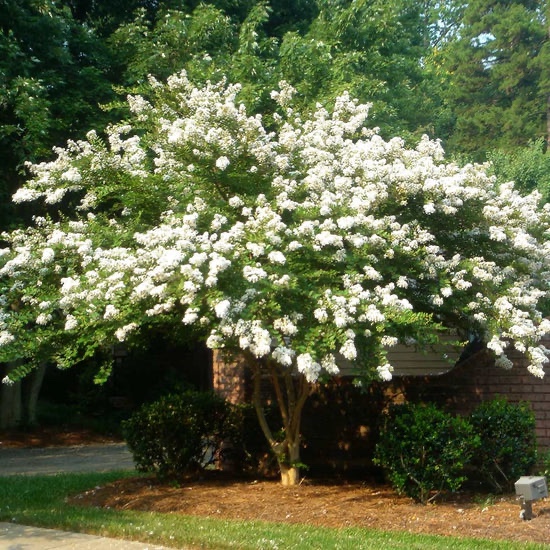
Crape Myrtles are pretty easygoing, and how you train them will determine what your end result is going to look like.
Planting Location
Crape myrtles enjoy the sun, yes, even Florida heat does not bother them. They grow well in planting zone 7 through 10.
They can get 20 to 40 feet tall, so planting them against your house may not be such a great idea. Especially if you have gutters and eaves.
The roots of crape myrtle are not invasive so they will not hurt your foundation or your pavement, It is safe for you to plant a crape myrtle 10 feet away from the foundation.
If you are trying to beautify your foundation with a crape myrtle, it may be a suggestion to use a dwarf variety so that it does not take over your foundation area. The following dwarf varieties are manageable in size and suitable as foundation shrub that is located between 8 and 10 feet from your foundation:
- Hope (white, 4-5 feet),
- Hopi (medium pink, 6-8 feet)
- Tonto (red, 10-12 feet)
Planting your Crape Myrtle
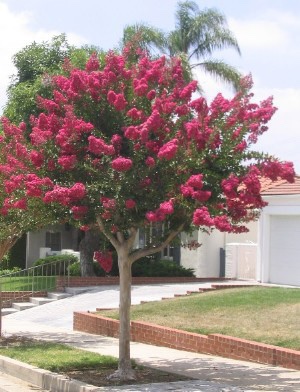
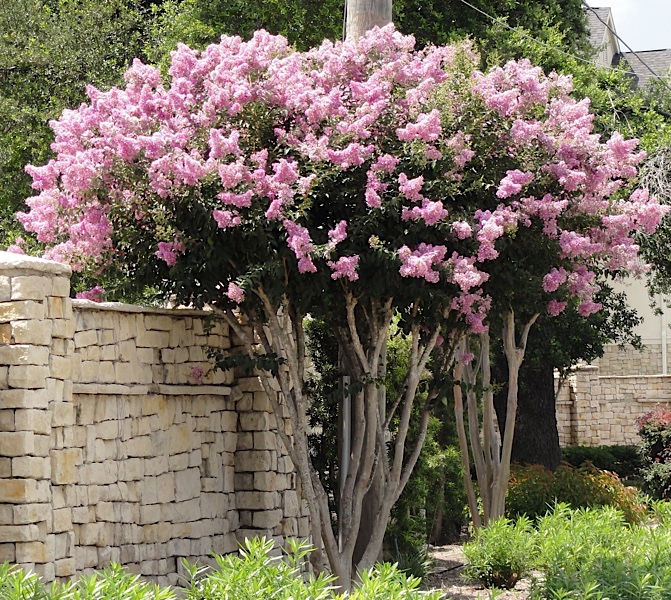
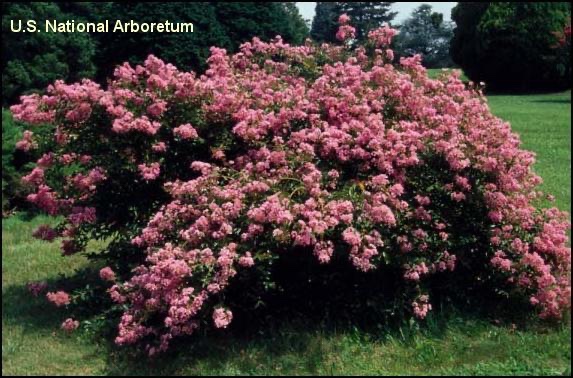
The larger varieties should be planted at a minimum of 10 feet away of the foundation, and these varieties turn into true trees if you train them.
- Do not plant any trees or bushes in your drain field or on top of your septic tank! The roots can destroy your septic system, and this would be an expensive repair.
- Be careful where you dig! You can call Sunshine 811 to have them locate any underground utilities before you dig. It is easy to hit your cable line or even a sprinkler line as these are close to the surface. Unless there is no irrigation, cable or power going in the area where you are planting, it is better to be safe than sorry. You can use a small handshovel to dig around instead of a large shovel as well to minimize your risk, but it will take you a bit longer,
- Dig a hole twice the size of the rootball, and a tiny bit deeper than the pot.
- Add a shovel of topsoil and a shovel of compost to the bottom of the hole, you can use black Kow, which is composted cow manure. Mix these two together, and water well.
- Water the crape myrtle while it is still in the pot to make sure the rootball is nice and moist.
- With a box cutter, slice the size of the pot so that you can give the rootball space to come loose from the pot. Carefully remove the pot with the rootball above the hole.
- Put your crape myrtle upright and position for final installation. Now backfill with some more topsoil, and dirt that came out of the hole to the same level as the top of your rootball.
- Water gently, once more, and then install some mulch around the crape myrtle though keep the trunk and top exposed, do not install mulch up to the trunk of the tree as this can introduce disease and fungi.
Fertilizing your Crape Myrtle
- Fertilize your newly planted Crape Myrtle once per month during the growing season with a 8-8-8 balanced fertilizer.
- Feed established plants once in the spring using a slow-release fertilizer.
- Stop feeding Crape Myrtle in the fall to harden the plant off and to let it go dormant for winter.
Pruning your Crape Myrtle
You will want to prune your crape myrtle because the flower heads form on new growth.
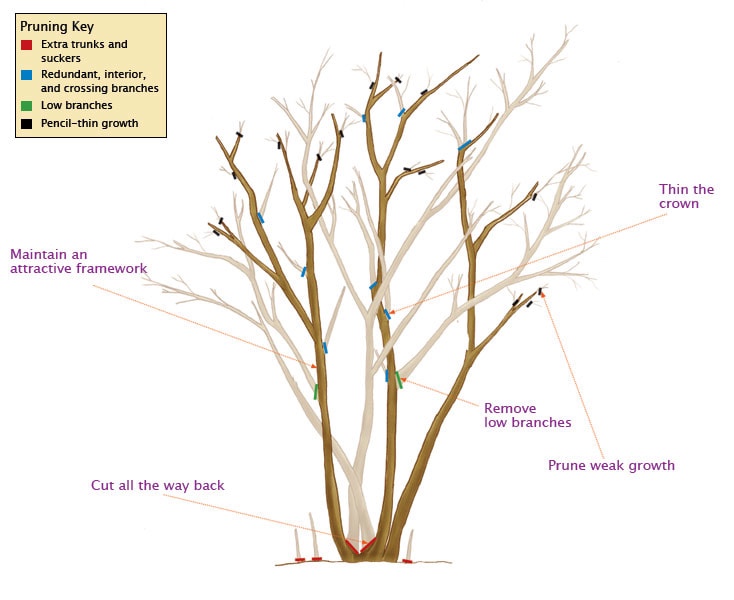
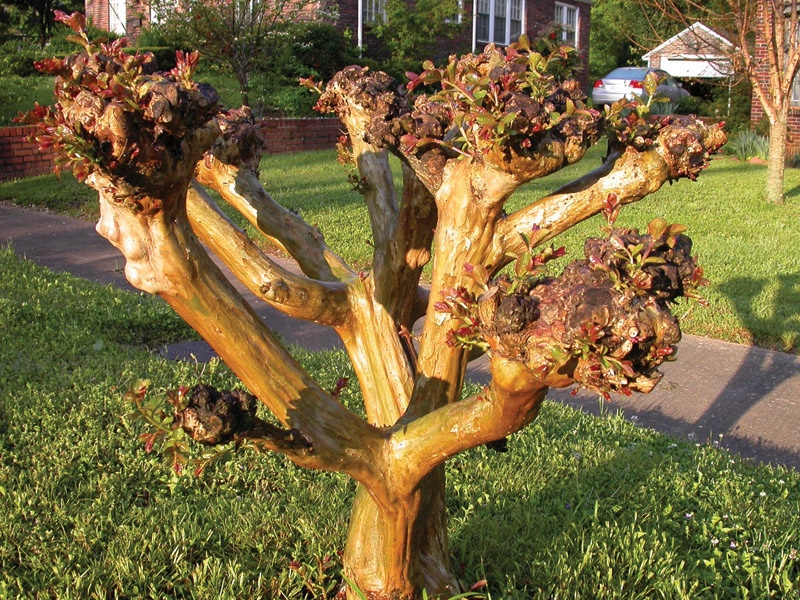
How you prune your crape myrtle is up to you, as it is solely up to what you want your end result to be like. I know crape murder appears to have become a controversial topic among gardeners, where some completely condemn the practice and others see some purpose in it.
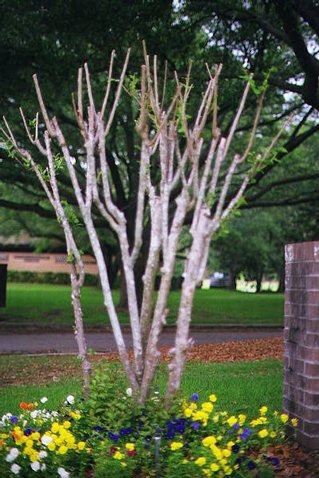
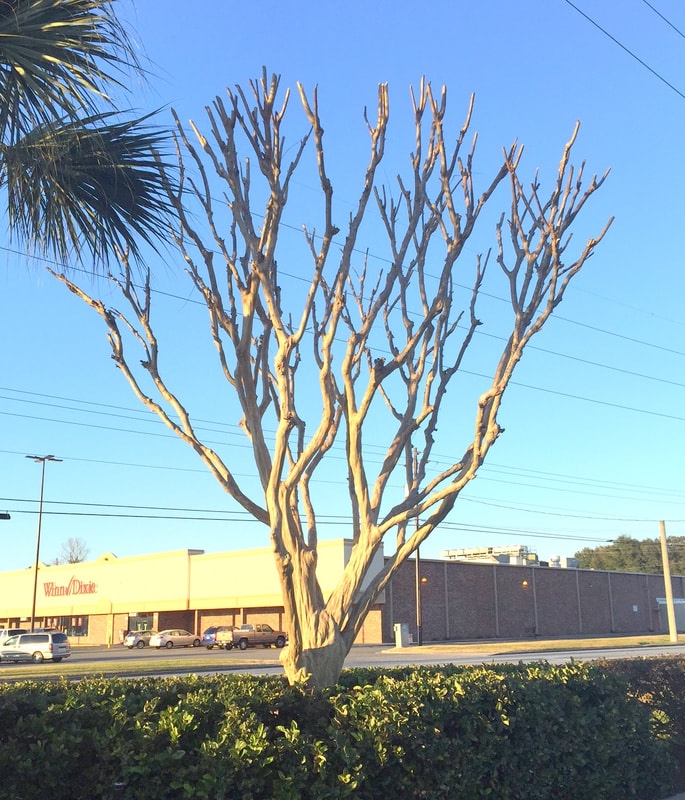
You can train your crape myrtle in single trunk, or leave it more natural as a multi-trunk tree, and you do not need to excessively prune the tops to obtain new growth. Look at some of the examples below so you can see what properly pruned crape myrtles look like.
I hope you will enjoy your Crape Myrtle for years to come. If you are interested in learning more about gardening and join fellow gardeners with similar goals, please consider joining the Florida Federation of Garden Clubs
 Inga’s Creations